

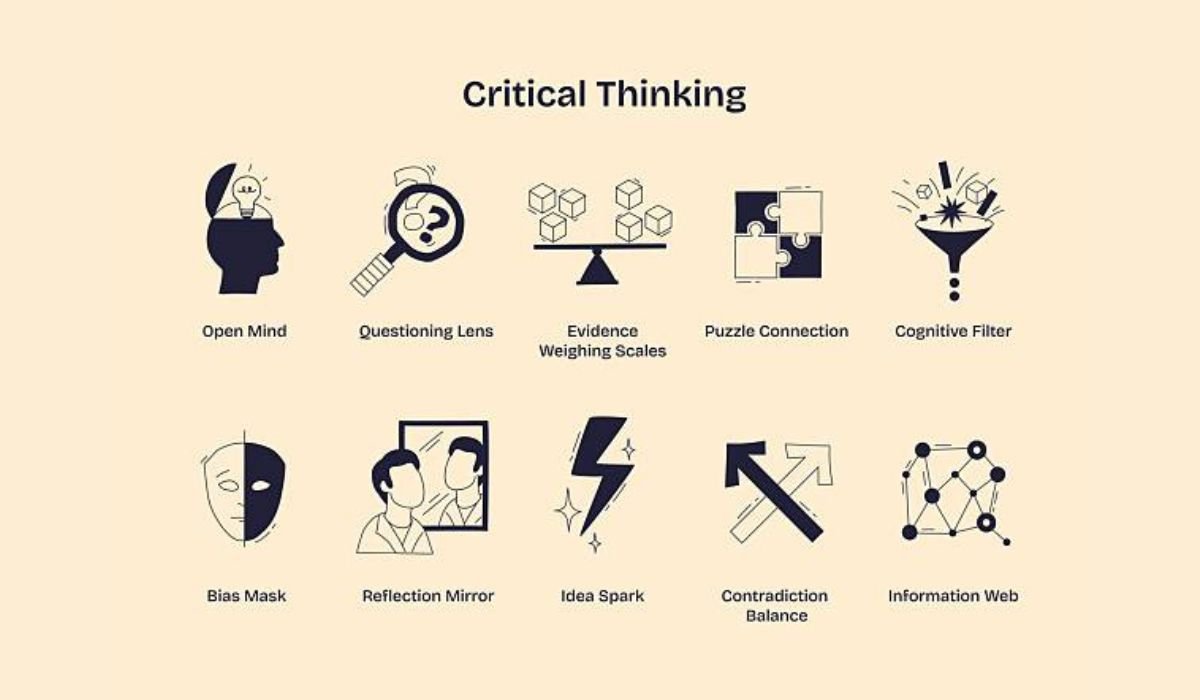
Did you realize that a whopping 95 percent of executives and hiring managers see critical thinking as vital in the workplace, but surveys show it’s often in short supply? It’s kind of wild when you think about it: in a world flooded with information, making smart choices shouldn’t be this tricky. Yet here we are, juggling deadlines, personal goals, and endless data streams. That’s where critical thinking exercises come in, like a mental workout routine to build sharper analytical reasoning and cut through the noise.
If you’re a busy professional tackling complex projects, a student navigating tough coursework, or just someone eager to level up your cognitive agility, this article is your guide. We’ll dive into ten practical exercises designed to strengthen your problem-solving techniques and decision-making framework. Think of it as a personal coach in your pocket, offering steps you can weave into everyday life. No fluff, just actionable tools to help you spot logical fallacies, reduce cognitive bias, and embrace objective analysis. Ready to get started? Let’s jump in.
Table of Contents
- Introduction to Critical Thinking and Why It Matters
- The 10 Effective Critical Thinking Exercises
- Integrating These Exercises into Your Daily Routine
- A Quick Comparison: Solo vs. Team-Based Exercises
- FAQs on Critical Thinking Exercises
- Wrapping It Up: Your Next Steps
Introduction to Critical Thinking and Why It Matters
Critical thinking isn’t some abstract skill reserved for philosophers or boardroom elites. At its core, it’s about questioning assumptions, weighing evidence, and arriving at sound conclusions. In my experience working with teams on SEO strategies, I’ve seen how skipping this step leads to costly mistakes, like chasing trends without real data.
Why bother sharpening it now? Well, studies highlight that strong thinkers adapt faster in volatile job markets, where AI handles routine tasks but leaves the nuanced decisions to us humans. For professionals, it means better root cause analysis on business problems. Students benefit through improved active learning, and lifelong learners gain that edge in personal growth. Honestly, this isn’t talked about enough: integrating mental models early can transform how you handle everything from career pivots to relationship dilemmas.
But enough backstory. The real value lies in practice. Below, I’ll outline ten exercises, each with clear steps, tips, and why they work. You’ll notice they’re flexible, fitting into coffee breaks or team meetings.
The 10 Effective Critical Thinking Exercises
These aren’t one-and-done drills. They’re habits you build over time, encouraging perspective-taking and logical scrutiny. I’ve pulled from real-world applications, blending solo reflections with interactive ones for variety.
Exercise 1: Daily Bias Check-In
Start simple: each morning, scan a news article or social media post and list three potential cognitive biases at play. For instance, confirmation bias might make you nod along with opinions that match yours. Jot down why you think that, then seek out a counterview.
This builds awareness fast. You might not know this, but research shows we encounter dozens of biases daily, clouding judgment. Professionals love this for emails or reports, spotting slants before hitting send. Try it for a week, and you’ll feel more grounded in objective analysis.
Exercise 2: The 5 Whys for Root Cause Analysis
Facing a snag at work or home? Ask “why” five times to drill down. Say your project missed a deadline: Why? Team overload. Why? Poor planning. Keep going until you hit the core issue.
It’s a classic problem-solving technique from business, but it shines in personal contexts too. In my copywriting days, I’d use it to unpack why a campaign flopped, often revealing overlooked assumptions. Students, apply it to study habits: why did that exam go south? The answers lead to real fixes, sharpening analytical skills without overcomplicating things.
Exercise 3: Mental Model Mapping
Pick a decision, like choosing a new tool for work, and map it against a mental model such as SWOT (Strengths, Weaknesses, Opportunities, Threats). Sketch it on paper or a note app.
Mental models are like shortcuts for complex thinking. They encourage broad perspective-taking, which is key for lifelong learners juggling multiple roles. Some experts disagree on the best models, but here’s my take: start with basics like SWOT, then layer in others like inversion (what if the opposite were true?). It’s empowering, turning vague worries into structured insights.
Exercise 4: Logical Fallacy Hunt
Grab a debate video or opinion piece, and hunt for fallacies: ad hominem attacks, straw man arguments, you name it. Note them, then rewrite the argument without them.
This one’s fun for adults, almost like a game. It hones your ability to detect flawed reasoning, crucial in meetings or online discussions. I’ve caught myself in fallacies during client pitches, and correcting them on the fly builds confidence. For teams, turn it into a group activity to foster collaborative critical thinking.
Exercise 5: Perspective Switcheroo
Take a hot-button issue, like remote work policies, and argue from three viewpoints: yours, your boss’s, and a neutral outsider’s. Write a paragraph for each.
Perspective-taking exercises reduce bias and boost empathy, which pays off in negotiations or conflicts. Think about it: how often do misunderstandings stem from tunnel vision? Students, use this for essays to add depth. It’s a subtle way to improve decision-making, making you more adaptable in diverse settings.
Exercise 6: Decision-Making Framework Drill
For any choice, big or small, apply a framework like pros/cons lists or Eisenhower Matrix (urgent vs. important). Time yourself to 10 minutes.
Frameworks provide structure amid chaos. Professionals swear by them for prioritizing tasks, while learners use them to manage time. Let’s break that down: without one, decisions feel overwhelming. With practice, you’ll internalize them, leading to quicker, smarter calls. Add a twist: review past decisions with the same tool to spot patterns.
Exercise 7: Riddle and Puzzle Sessions
Dedicate 15 minutes daily to riddles or logic puzzles, apps like Lumosity or classic ones like Sudoku. Explain your solving process aloud or in notes.
Critical thinking games for adults aren’t just entertainment; they wire your brain for analytical reasoning. You know, the kind that helps dissect business problems or academic challenges. In my experience, mixing fun with focus keeps motivation high. Team building? Share puzzles in meetings for a light-hearted boost.
Exercise 8: Active Questioning in Conversations
In your next chat or meeting, ask open-ended questions: “What evidence supports that?” or “How might this play out differently?”
Active learning thrives on inquiry. It transforms passive listening into engaged analysis, cutting through surface-level talk. For students, it’s gold in class discussions. Professionals, imagine uncovering hidden risks in plans. Well, it works because it invites deeper thought without confrontation.
Exercise 9: Scenario Planning
Imagine a “what if” scenario, like a market shift affecting your job, and outline three responses: best case, worst, and likely.
This strengthens foresight, a key to cognitive agility. Rooted in business strategy, it’s adaptable for personal life too. Some might call it overthinking, but trust me, it’s preparation. Lifelong learners, use it for goal-setting to anticipate hurdles.
Exercise 10: Reflection Journaling
End your day by journaling: What decision did I make? Was it biased? What would I change?
Journaling cements habits, promoting self-awareness. It’s low-key but powerful for reducing cognitive bias over time. I’ve seen it turn vague improvements into tangible growth. Make it a ritual, and watch your thinking evolve.
Integrating These Exercises into Your Daily Routine
Slipping these into life is easier than you think. Start small: pair bias check-ins with breakfast, or puzzles during commutes. For teams, weave in group versions for building critical thinking activities that double as bonding.
Track progress in a simple app or notebook. Over time, you’ll notice sharper instincts. How to improve critical thinking skills daily? Consistency is key, folks. Mix solo and collaborative ones for balance.
A Quick Comparison: Solo vs. Team-Based Exercises
To help you choose, here’s a table breaking down pros and cons of solo versus team approaches. It’s based on what I’ve observed in workshops and personal trials.
| Aspect | Solo Exercises (e.g., Journaling, Puzzles) | Team-Based Exercises (e.g., Debates, Scenario Planning) |
| Pros | Flexible timing, deep self-reflection, low pressure | Diverse perspectives, real-time feedback, builds collaboration |
| Cons | Can feel isolating, limited viewpoints | Requires scheduling, potential conflicts |
| Best For | Students or introverts seeking personal growth | Professionals in dynamic work environments |
| Time Needed | 10-20 minutes daily | 30-60 minutes per session |
This setup shows how to mix them for maximum impact. Solo for introspection, team for expansion.
FAQs
Here are some common questions folks ask, drawn from what I’ve encountered in discussions and online forums.
What exactly are critical thinking exercises?
They’re structured activities to build skills like analytical reasoning and problem-solving. Think puzzles, debates, or bias checks that push you to question and evaluate ideas more deeply. They’re practical tools anyone can use to think clearer.
How can I improve critical thinking skills daily?
Incorporate small habits, like questioning news sources or using the 5 Whys on routine issues. Over time, these build into stronger habits. Consistency matters more than intensity, so aim for 15 minutes a day.
Are there critical thinking games for adults?
Absolutely, things like chess, escape rooms, or apps with logic puzzles qualify. They make learning fun while honing decision-making. Try them solo or with friends for an engaging twist.
Why is critical thinking important in the workplace?
It helps spot flaws in plans, innovate solutions, and make informed choices amid uncertainty. Surveys show 95 percent of leaders value it highly, as it drives better outcomes and adaptability.
How do exercises reduce cognitive bias?
By forcing you to identify and challenge assumptions, like in bias check-ins or perspective switches. It’s about awareness first, then adjustment. Regular practice makes unbiased thinking second nature.
What are some useful mental models for critical thinking?
Start with SWOT for analysis or inversion to consider opposites. These frameworks simplify complex problems. Pick one per week to experiment with in real scenarios.
Can critical thinking be taught, or is it innate?
It’s definitely teachable through targeted exercises and reflection. While some have a natural bent, anyone can improve with effort. That’s the encouraging part: it’s a skill, not a gift.
Wrapping It Up: Your Next Steps
There you have it: ten solid critical thinking exercises to elevate your game, from root cause analysis for business problems to games that keep things light. We’ve covered the hows, whys, and even a comparison to mix it up. The key? Make them yours, integrating into routines for lasting change.
In my view, the future belongs to those who think critically, especially as tech evolves. So, what’s one exercise you’ll try today? Pick it, commit, and watch your decisions sharpen. If you’re ready for more, dive into related reads or share your wins in the comments. Let’s keep the conversation going.
 IQnewswire