

Imagine a bustling metropolis where traffic lights adapt in real time to ease congestion, streetlights dim automatically to conserve energy, and waste bins signal when they need emptying. This vision is becoming reality through smart infrastructure: IoT in cities. As urban areas swell with populations projected to reach 68% of the world’s people by 2050, challenges like resource scarcity, pollution, and inefficiency loom large. This article explores the transformative potential of the Internet of Things (IoT) in urban environments. It provides stakeholders, from urban planners to sustainability advocates, with insights into technologies, benefits, challenges, and a practical roadmap for implementation. By focusing on human and environmental gains, we aim to guide you toward building resilient, connected cities that thrive.
What is Smart Infrastructure?
Smart infrastructure refers to the integration of physical urban systems with digital technologies to create efficient, responsive environments. At its core is the Internet of Things (IoT), a network of interconnected devices that collect and exchange data via sensors, software, and connectivity.
Think about how this works in practice. Sensors embedded in roads, buildings, and utilities gather information on everything from air quality to energy usage. This data feeds into central systems for analysis, enabling automated decisions that improve daily life. For instance, IoT can detect leaks in water pipes before they cause major damage, saving resources and preventing disruptions.
Why does this matter? Traditional infrastructure often operates in silos, leading to waste and delays. Smart infrastructure breaks these barriers, fostering urban connectivity that links systems for holistic management. It’s not just about tech; it’s about creating cities that adapt to residents’ needs, promoting sustainability and equity.
Key Technologies Powering IoT in Cities
Several cutting-edge technologies drive smart infrastructure: IoT in cities. Let’s break them down.
Digital Twin Technology
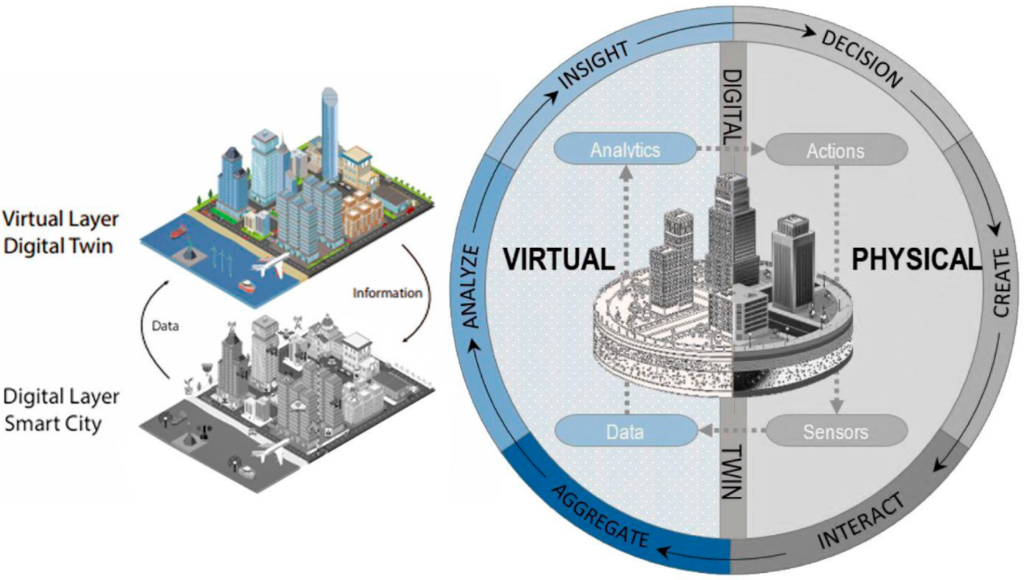
Digital twin technology creates virtual replicas of physical urban assets, like buildings or transportation networks. These models simulate scenarios to predict outcomes and optimize planning.
For example, city officials can test traffic changes in a digital twin before real-world implementation, reducing risks. This tool enhances decision-making by providing insights into how changes affect the environment and economy.
Edge Computing in Cities
Edge computing in cities processes data closer to its source, rather than sending it to distant servers. This reduces latency, enabling faster responses in critical situations.
In busy urban areas, edge computing supports real-time applications, such as adjusting traffic signals during peak hours. It also conserves bandwidth, making IoT systems more efficient for large-scale use.
Intelligent Transportation Systems (ITS)
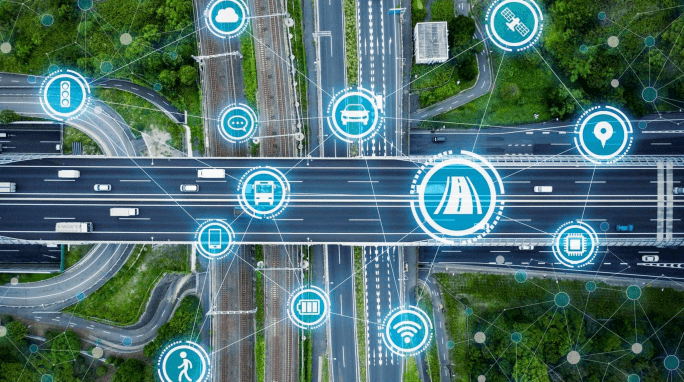
Intelligent transportation systems (ITS) use IoT to manage traffic flow, public transit, and parking. Sensors on roads and vehicles collect data to minimize congestion and improve safety.
Picture adaptive signals that prioritize buses or emergency vehicles. ITS not only cuts travel times but also lowers emissions, contributing to urban sustainability.
Smart Grid Integration
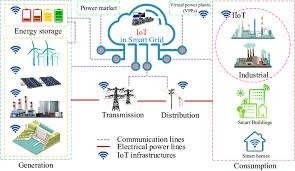
Smart grid integration connects energy systems with IoT for efficient distribution. Sensors monitor usage patterns, balancing supply and demand to prevent outages.
This technology incorporates renewables, like solar, more seamlessly. Cities benefit from lower costs and reduced carbon footprints, aligning with global sustainability goals.
Real-Time Data Analytics and Environmental Sensor Networks
Real-time data analytics processes IoT data instantly to inform actions. Paired with environmental sensor networks, it tracks air quality, noise, and weather.
These networks help cities respond to pollution spikes or natural events, protecting public health. For instance, sensors can trigger alerts for high ozone levels, guiding outdoor activities.
LPWAN and Municipal Asset Management
LPWAN (Low-Power Wide-Area Network) provides long-range, low-energy connectivity ideal for urban IoT. It supports municipal asset management, tracking everything from streetlights to water meters.
This ensures maintenance is proactive, extending asset life and cutting costs. Cities like those using Cisco Kinetic leverage LPWAN for scalable solutions.
Benefits of Smart Infrastructure IoT in Cities
The benefits of smart infrastructure IoT in cities extend far beyond convenience. They touch on efficiency, environment, and economy.
First, consider resource optimization. IoT enables precise monitoring, reducing waste in energy and water. Cities can save up to 30% on utilities through smart grids and sensors.
Public safety improves too. Smart infrastructure IoT in cities for public safety includes connected cameras and sensors that detect incidents like accidents or crimes in real time, allowing quicker responses.
In transportation, intelligent transportation systems cut congestion by 20-30%, easing commutes and lowering emissions.
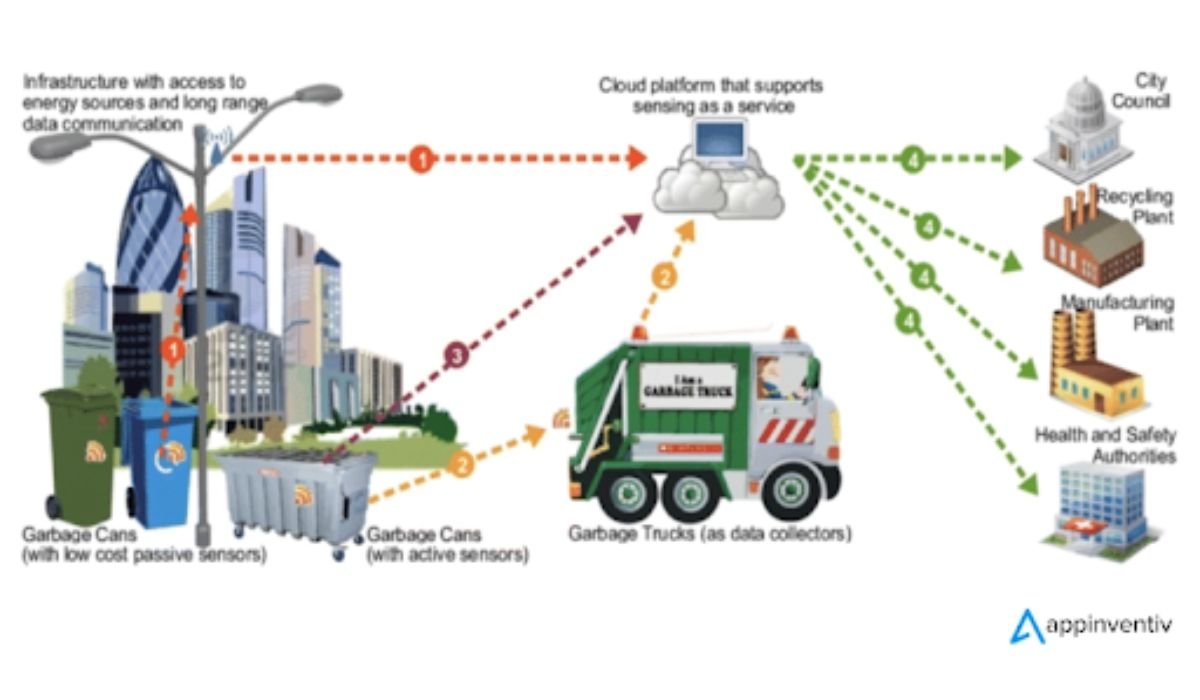
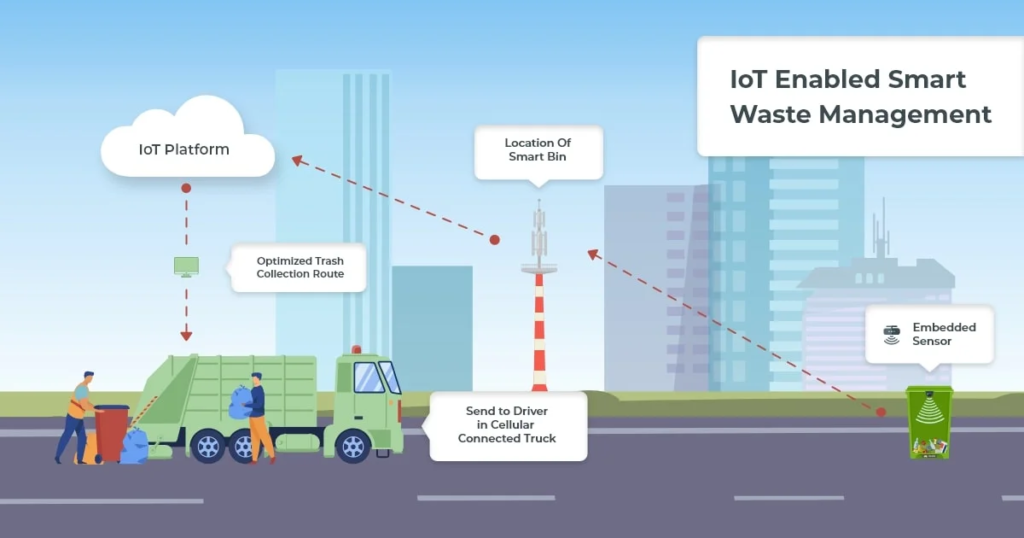
How IoT improves municipal waste management is another highlight. Smart bins with sensors optimize collection routes, reducing fuel use by up to 50% and keeping streets cleaner.
The role of 5G in smart city infrastructure amplifies these gains. 5G’s high speed and low latency support massive device connections, enabling advanced applications like autonomous vehicles.
From a cost-benefit analysis of IoT urban development, returns are strong. Initial setups pay off through savings, with McKinsey estimating 10-30% quality-of-life improvements.
| Benefit | Description | Estimated Impact |
| Energy Efficiency | Smart grids reduce consumption | Up to 20% savings |
| Traffic Reduction | ITS optimizes flow | 15-25% less congestion |
| Waste Management | Sensor-based collections | 30-50% fuel savings |
| Public Safety | Real-time monitoring | Faster response times |
| Environmental Monitoring | Sensor networks track pollution | Improved air quality |
These advantages make IoT a cornerstone for sustainable urban growth. How to Integrate IoT in Urban Planning
READ ALSO: The Future of Smart Cities: Trends & Technologies Shaping Urban Life
Real-World Examples of IoT in Smart Cities
Real-world applications show the power of smart infrastructure: IoT in cities.
Singapore tops lists for smart cities, using IoT for everything from smart lighting to predictive maintenance. Sensors monitor infrastructure, preventing failures and saving costs.
In Barcelona, smart parking systems guide drivers to open spots, cutting search time by 30% and emissions accordingly.
Seoul integrates IoT in public transport, providing real-time updates that enhance commuter experiences.
Dubai employs environmental sensor networks to manage water and energy, aligning with its sustainability vision.
In the U.S., Peachtree Corners uses 5G routers for smart intersections, improving traffic and safety.
These case studies demonstrate scalable impacts. For more, see Cisco Smart City Solutions.
| City | IoT Application | Key Outcome |
| Singapore | Predictive maintenance | Reduced downtime |
| Barcelona | Smart parking | Lower emissions |
| Seoul | Public transit updates | Improved efficiency |
| Dubai | Resource management | Sustainability gains |
| Peachtree Corners | Intersection monitoring | Enhanced safety |
Overcoming Challenges of IoT in Urban Planning
Despite benefits, implementing IoT brings hurdles. Overcoming challenges of IoT in urban planning requires strategic approaches.
Security tops the list. IoT devices are vulnerable to hacks, potentially compromising data or infrastructure. Solutions include encryption and regular updates to safeguard systems.
Scalability is another issue. Scaling IoT solutions for large metropolitan areas demands robust networks that handle millions of devices without failure. Modular designs and LPWAN help, allowing gradual expansion.
Interoperability challenges arise when devices from different vendors don’t communicate. Standard protocols can resolve this, ensuring seamless integration.
Costs and expertise gaps also matter. Initial investments are high, but long-term savings justify them. Training programs and partnerships with firms like Siemens address skill shortages.
Privacy concerns require transparent data policies to build trust. By prioritizing these, cities can navigate obstacles effectively.
| Challenge | Solution | Example Benefit |
| Security | Encryption protocols | Protected data |
| Scalability | Modular systems | Easy expansion |
| Interoperability | Standard APIs | Seamless integration |
| Cost | Phased rollouts | Controlled spending |
| Expertise | Training partnerships | Skilled workforce |
Common Pitfalls in Smart City Projects
A Roadmap for Implementing IoT in Cities
Ready to act? Here’s a step-by-step roadmap for implementing smart infrastructure: IoT in cities.
- Assess Needs: Survey your city’s pain points, like traffic or waste. Engage stakeholders for input.
- Choose Technologies: Select tools like digital twin technology for planning and edge computing for operations.
- Pilot Projects: Start small, such as installing sensors in one district. Measure results to refine.
- Ensure Connectivity: Deploy 5G and LPWAN for reliable data flow.
- Address Security: Implement firewalls and compliance standards from day one.
- Scale Up: Use data from pilots to expand, focusing on scaling IoT solutions for large metropolitan areas.
- Monitor and Optimize: Use real-time data analytics to track performance and adjust.
This approach minimizes risks while maximizing benefits. Pro tip: Collaborate with experts for customized solutions.
Future Trends in Smart Infrastructure
Looking ahead, future trends in IoT for smart cities 2026 promise exciting advancements.
- AI integration will dominate, enabling predictive maintenance and personalized services.
- Edge processing matures, handling more complex tasks locally for efficiency.
- Satellite-cellular convergence expands connectivity in remote urban areas.
- Sustainability focuses on AI-powered transit and urban farming.
- Blockchain enhances security, ensuring tamper-proof data.
These trends will make cities more resilient and inclusive.
Smart infrastructure: IoT in cities holds immense promise for transforming urban life. Key takeaways include leveraging technologies like digital twins and 5G for efficiency, while tackling security and scalability head-on. Benefits span cost savings, safety, and sustainability. As you consider your next steps, consult experts or launch a pilot to harness this potential. Your city could be the next success story in connected urban development.
YOU MAY ALSO LIKE: Green Infrastructure and Sustainable Urban Design: The Planner’s Guide to Urban Resilience
 Arthur