

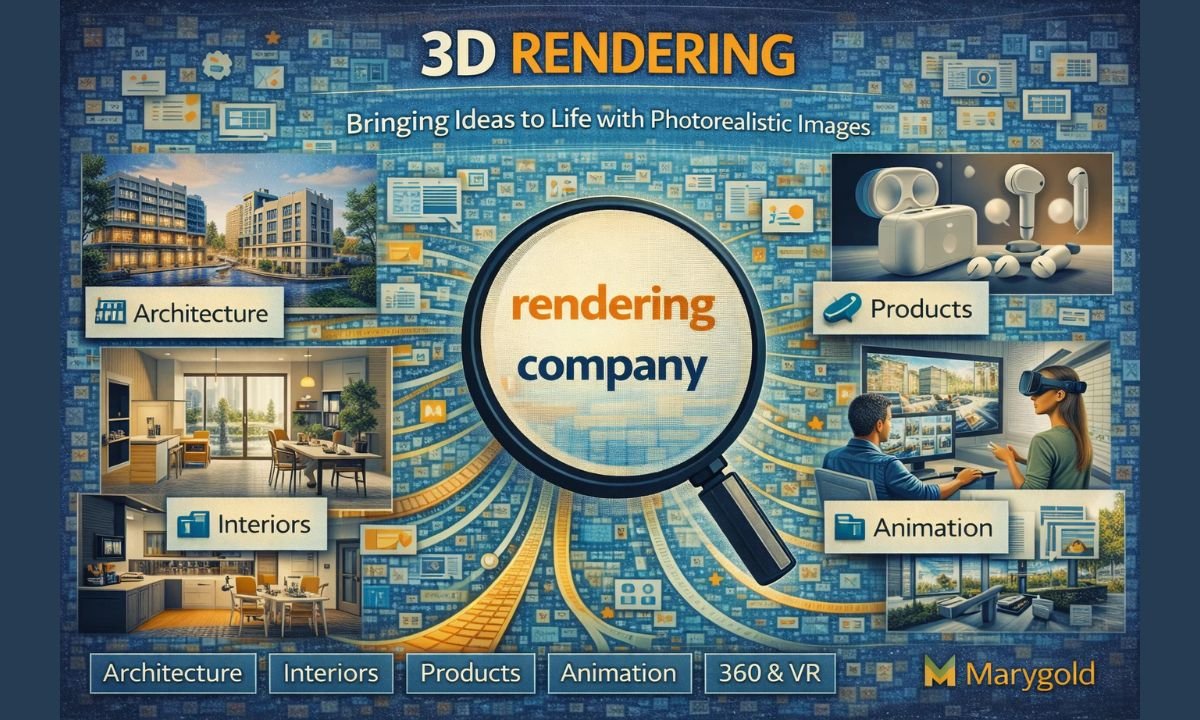
People decide faster when they can see what they’re buying, approving, or investing in. That’s true in real estate, product design, architecture, hospitality, and even manufacturing. Technical drawings and descriptions are important, but they rarely create instant confidence for non-technical stakeholders. 3D rendering fills that gap by translating concepts into visuals that look tangible and believable. A strong rendering company doesn’t just make images; it helps teams communicate, align, and move forward with fewer misunderstandings and less rework.
What 3D rendering actually includes
3D rendering is the process of creating realistic or stylized images from a 3D model. In practice, it covers multiple formats: exterior architectural renders, interior renders, product renders, lifestyle scenes, aerial views, cutaway or exploded views, and detailed material close-ups. It can also include animations, 360 panoramas, interactive views, and VR-ready scenes.
Each format serves a different purpose. Marketing images focus on emotion and first impressions. Design and approval images focus on clarity and accuracy. Product renders focus on detail, materials, and manufacturing realism. The best results come when the deliverables match the decision the visuals are meant to support.
Why 3D rendering matters for business outcomes
Rendering speeds up decision-making. When stakeholders can see the concept, fewer questions remain unanswered. That reduces the risk of late-stage revisions and misalignment between teams.
Rendering also increases perceived value. High-quality visuals signal quality, professionalism, and attention to detail. In industries like real estate, this can influence buyer trust and pricing perception. In product design, it can create a premium feel before manufacturing begins. In hospitality, it can sell the atmosphere and experience—something photos can’t capture before the space exists.
Finally, rendering supports storytelling. A good visual doesn’t just show what something looks like; it shows why it matters: the mood, the workflow, the lifestyle, the comfort, or the brand identity.
Realism vs. style: choosing the right look
Not all projects need photorealism. Sometimes a clean, stylized look is better for early-stage concepts or when the goal is to communicate form and function quickly. But for sales and marketing, realism often performs best because it reduces uncertainty.
The best approach is purpose-driven. Early design renderings can be faster and more conceptual, helping teams iterate. Final marketing renderings can be more polished, with refined lighting, detailed materials, and believable staging. A skilled team will help you choose the right level of realism so you don’t overspend early or undersell later.
What makes a render believable
Believability comes from details the human brain expects. Lighting must behave naturally, with consistent shadows and reflections. Materials should have depth—wood grain, stone variation, subtle roughness, and imperfect reflections rather than “plastic” surfaces. Scale must be correct so furniture, people, and objects feel proportional.
Composition also matters. A strong render uses camera angles and framing to guide attention. It highlights the most important elements—facade rhythm, natural light, key features—without clutter. Color grading and post-production polish can elevate the image, but they can’t rescue weak fundamentals like incorrect perspective or unrealistic materials.
Architectural rendering: exteriors and interiors
Exterior renders are often the hero assets for real estate and development marketing. They communicate identity, presence, and context. Choices like time of day, weather, landscaping, and street activity can shape how the project feels—luxury, family-friendly, eco-forward, or urban and dynamic.
Interior renders focus on how a space feels to live or work in. They should communicate layout, flow, and comfort while showcasing finishes. Staging should support the story without overpowering the architecture. For buyers, interiors answer emotional questions (“Would I enjoy being here?”) and practical questions (“Does this feel spacious?”).
Product and industrial rendering
3D rendering is equally valuable for products. It can show surfaces, materials, and details that are hard to capture in early prototypes. It can also produce consistent visuals for marketing across multiple product variants without expensive photoshoots.
Product rendering often includes studio-style shots (clean background, sharp detail), lifestyle scenes (product used in context), and technical visuals (exploded views, cutaways, feature callouts). It’s especially useful when products are customizable, still in development, or expensive to photograph in every configuration.
Animation, 360, and interactive formats
Static images are powerful, but motion and interactivity add clarity. Walkthrough animations show spatial flow for architecture and interiors. Product animations can demonstrate mechanisms, assembly, or usage scenarios.
360 panoramas create an immersive feel, useful for real estate and hospitality marketing. Interactive configurators allow users to explore options—finishes, colors, layouts—reducing uncertainty and supporting sales conversations.
These formats can significantly increase engagement, but they require planning. The best results come when the story is designed for motion rather than simply moving a camera through a scene without purpose.
How to work efficiently with a rendering partner
A smooth rendering project depends on inputs. Provide what you can: drawings, 3D models if available, material references, lighting mood references, and brand guidelines. Define the audience and the goal: investor presentation, presales, approvals, product launch, or listing marketing.
A good workflow usually includes early alignment on camera angles and composition, then material and lighting refinement, then final polish. Approving direction early prevents expensive revisions later. It’s also helpful to plan a “shot list” that covers the full story rather than requesting random images without a narrative structure.
Common mistakes to avoid
One mistake is trying to cram too much into one image. It’s better to create a cohesive set: a hero shot, a supporting angle, a detail shot, and a context view. Another mistake is inconsistent style across assets—mixing different staging, lighting, or color grading can make a campaign feel scattered.
Over-stylization can also hurt. If a render looks obviously artificial, it can reduce trust. At the same time, pure realism without storytelling can feel cold. The right balance is believable visuals with intentional mood.
A note on Marygold
Marygold Studio focuses on architectural visualization and 3D rendering for real estate and design presentations. That focus matters because the best rendering teams combine artistic storytelling with architectural discipline—accurate proportions, credible materials, and lighting that feels real. When visuals are created with both marketing and design intent in mind, they can work across multiple needs: presales, investor decks, listings, approvals, and brand campaigns.
What to look for in a rendering company
Look for consistency across their portfolio. One impressive image isn’t enough; you want a team that can deliver a full set with stable quality. Evaluate lighting realism, material accuracy, and composition. Ask about process: how they handle revisions, how they confirm direction early, and how they ensure timelines stay predictable.
Also consider communication. Great rendering is collaborative. The team should ask the right questions about audience, goals, and mood, and they should be able to explain decisions clearly rather than just executing blindly.
Why rendering is an advantage, not just an expense
3D rendering can reduce risk, accelerate approvals, increase marketing performance, and elevate perceived value. It helps people understand what they’re buying before it exists, and it helps teams align before costly changes happen.
When you treat rendering as part of a broader strategy—design communication, stakeholder alignment, and marketing storytelling—it becomes a multiplier. The right rendering company can turn uncertainty into confidence and ideas into visuals that drive decisions.
 Siam
Siam