

Efficient scheduling plays a crucial role in the smooth operation of any therapy practice. Appointment management affects patient flow, staff productivity, and overall service quality. Clinics that rely on structured scheduling systems sometimes experience fewer missed visits, better coordination, and clearer visibility of daily workloads. Choosing the right digital scheduling tool helps practices organize appointments, track patient visits, and maintain consistent communication with patients and staff.
Modern clinics increasingly depend on physical therapy scheduling software to manage appointments, streamline workflows, and reduce manual administrative tasks. An effective scheduling system should provide clear calendar views, automated communication tools, and secure patient data management. These capabilities help therapy practices stay organized while ensuring that patient visits are managed accurately and efficiently.
Essential Scheduling Capabilities
A scheduling platform designed for therapy practices should provide tools that simplify daily operations while giving staff a clear overview of appointments and availability.
Visual Calendar And Appointment Tracking
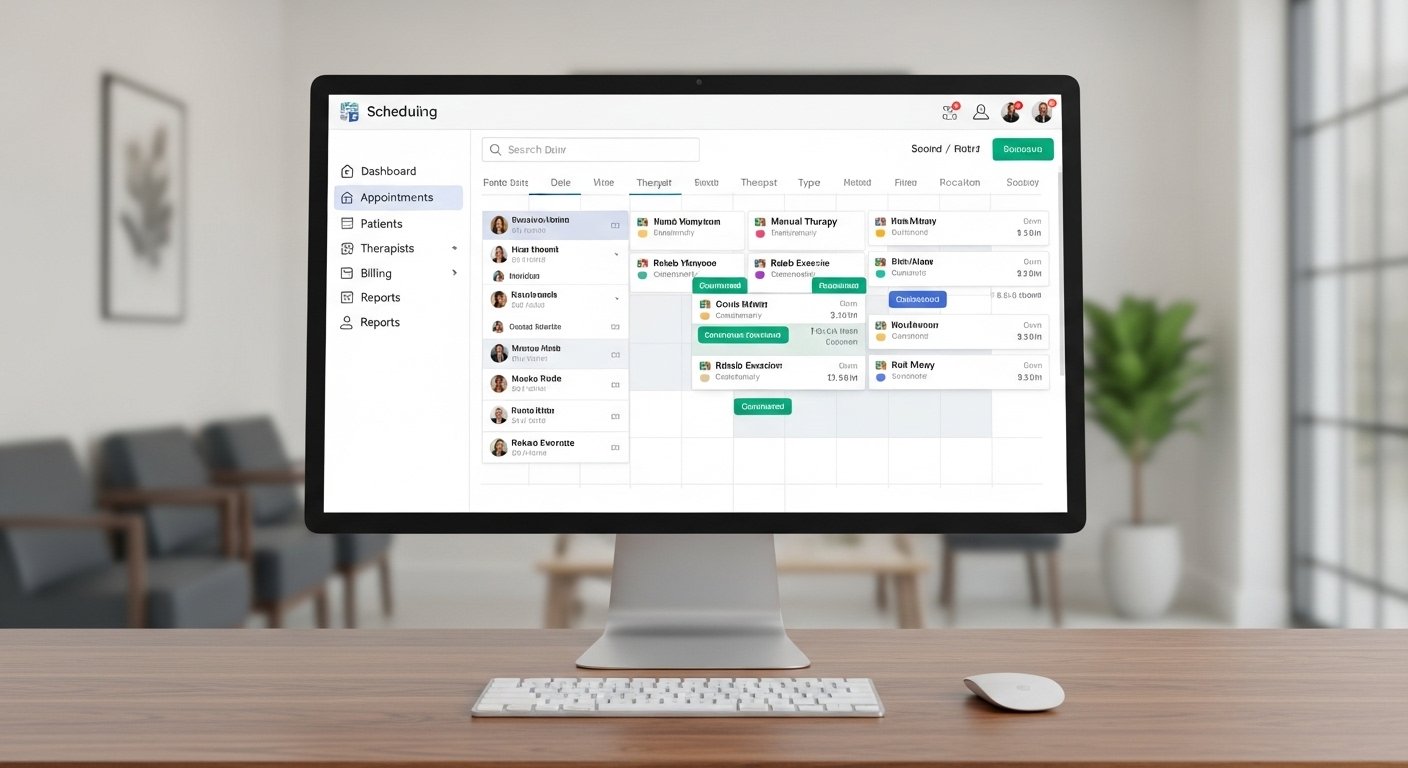
A clear and interactive calendar allows staff to review appointments quickly and understand the status of each visit. Visual scheduling tools provide a snapshot of therapist availability, upcoming appointments, and completed sessions.
Color-coded calendars make it easier to identify appointment types, therapist schedules, and patient visit status without opening multiple screens. Quick access to this information helps front desk teams coordinate patient visits efficiently and avoid scheduling conflicts.
Automated Appointment Reminders
Missed appointments can interrupt clinic productivity and reduce the number of patients served each day. Automated reminder systems help reduce cancellations and no-shows by sending notifications directly to patients.
These reminders may be delivered through email or text messages and are typically triggered automatically before scheduled visits. Automated communication ensures that patients receive timely alerts while reducing the amount of manual outreach required from administrative staff.
Operational And Compliance Features
Beyond appointment booking, scheduling systems should support broader practice management needs while maintaining regulatory compliance.
Customizable Calendar Views
Different team members sometimes need different ways to review appointment schedules. Customizable calendar views allow staff to switch between daily, weekly, or location-based views depending on their role. These flexible views help therapists, front desk teams, and managers monitor schedules based on their responsibilities and clinic needs.
Integrated Patient Waitlist
Busy practices sometimes maintain waiting lists for patients who need earlier appointments. A built-in waitlist system allows staff to track patients waiting for available slots and quickly fill openings created by cancellations. When a time slot becomes available, staff can easily contact waitlisted patients and fill the appointment, helping maintain productivity throughout the day.
Secure And Compliant Data Management
Patient scheduling tools must protect sensitive health information while allowing authorized staff to access schedules from different locations. Secure systems that meet healthcare privacy standards help clinics maintain patient confidentiality while supporting remote access when needed.
Many scheduling platforms are also designed to assist with compliance requirements related to healthcare programs and insurance documentation. These tools help track authorizations and maintain accurate records tied to patient appointments.
Integrated Workflow Support
The most effective physical therapy scheduling software connects scheduling with other clinic functions such as documentation, communication, and practice management tasks. Integrated workflows allow therapists and administrative staff to access relevant patient information alongside appointment details, reducing the need to switch between multiple systems.
Efficient scheduling technology supports organized clinic operations, improves patient communication, and helps therapy practices maintain consistent appointment management. When scheduling tools provide clear visibility, automated communication, and secure patient management, therapy clinics can maintain reliable daily operations while focusing on patient care.
 Siam
Siam