

Imagine a computer that doesn’t just crunch numbers faster—it solves problems in minutes that would take the world’s most powerful supercomputers longer than the age of the universe. Sounds like science fiction? Well, in 2024, we got a lot closer to making that a reality. Quantum computing finally stepped out of the lab shadows and into the spotlight with breakthroughs that made even skeptical physicists sit up and take notice.
This wasn’t about adding a few more qubits or tweaking an algorithm. The real story of 2024 was the decisive move toward error-corrected, logical qubits—systems that can actually do useful work without collapsing under noise. Two milestones dominated headlines: Google’s Willow chip demonstrating error correction below the threshold, and the Harvard/MIT/QuEra team’s creation of a processor with 48 logical qubits. Together, they signaled an industry inflection point. Quantum isn’t “coming soon” anymore. It’s here, and it’s getting practical.
Table of Contents
- The Big Picture: Why 2024 Mattered
- Google’s Willow: Scaling Error Correction Like Never Before
- Harvard, MIT, and QuEra: The Logical Qubit Leap with Neutral Atoms
- Comparing the Approaches: Superconducting vs. Neutral Atom Architectures
- Beyond the Headlines: Other Notable Advances
- Real-World Implications and Timelines
- FAQ:
- Looking Ahead: My Take on the Road Forward
Here are a few quick photos to give you a sense of the hardware behind these advances.
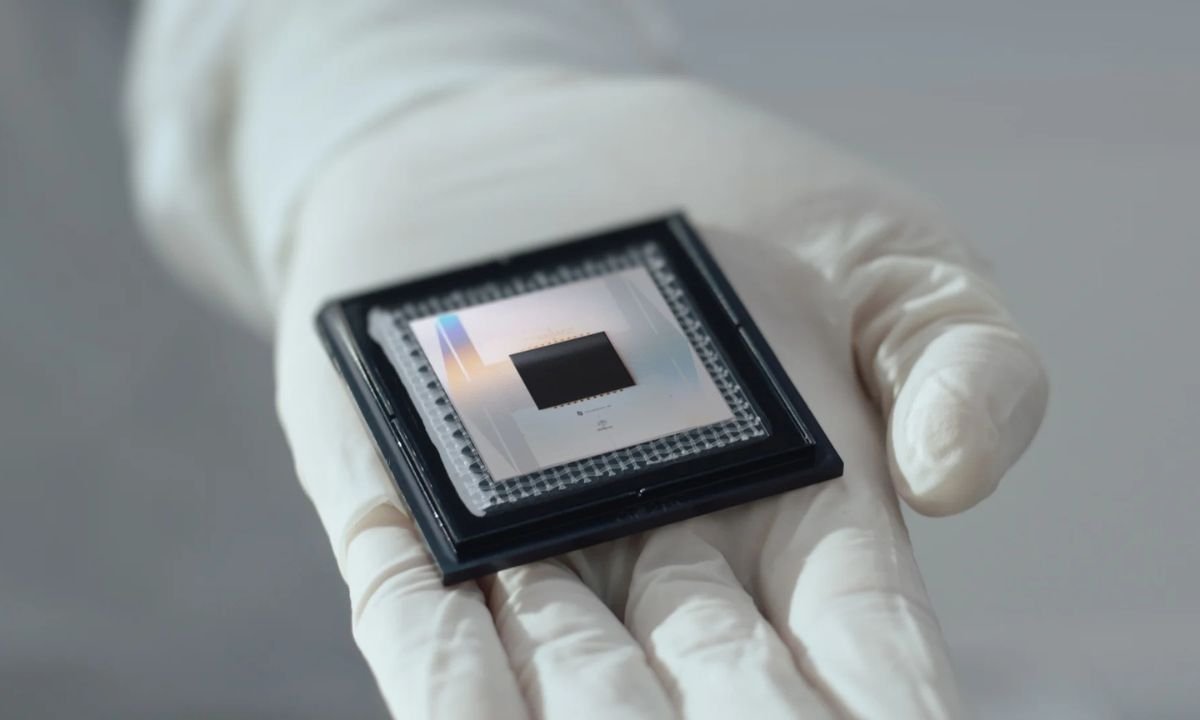
Here’s a close-up of Google’s Willow chip – that tiny powerhouse with 105 superconducting qubits.
Google Measures ‘Quantum Echoes’ on Willow Quantum Computer Chip …
And another view of the Willow processor in action – it’s surprisingly compact for what it can do.
The Big Picture: Why 2024 Mattered
For years, quantum computing lived in the NISQ era—Noisy Intermediate-Scale Quantum. Devices had dozens, sometimes hundreds of qubits, but errors piled up so fast that useful computations were impossible. The dream was fault-tolerant systems: logical qubits built from many physical ones, with error correction keeping things stable.
2024 cracked that code (pun intended). Error rates dropped exponentially with scale, and logical qubits went from a handful to dozens. Investments poured in, research papers flooded journals, and Physics World even shared its Breakthrough of the Year between two quantum teams. Honestly, this isn’t talked about enough outside specialist circles, but 2024 was the year the field turned the corner.
Google’s Willow: Scaling Error Correction Like Never Before
Let’s start with Google Quantum AI’s Willow chip, unveiled in December 2024. This 105-qubit superconducting processor didn’t just add more qubits—it showed that errors can be suppressed as you scale.
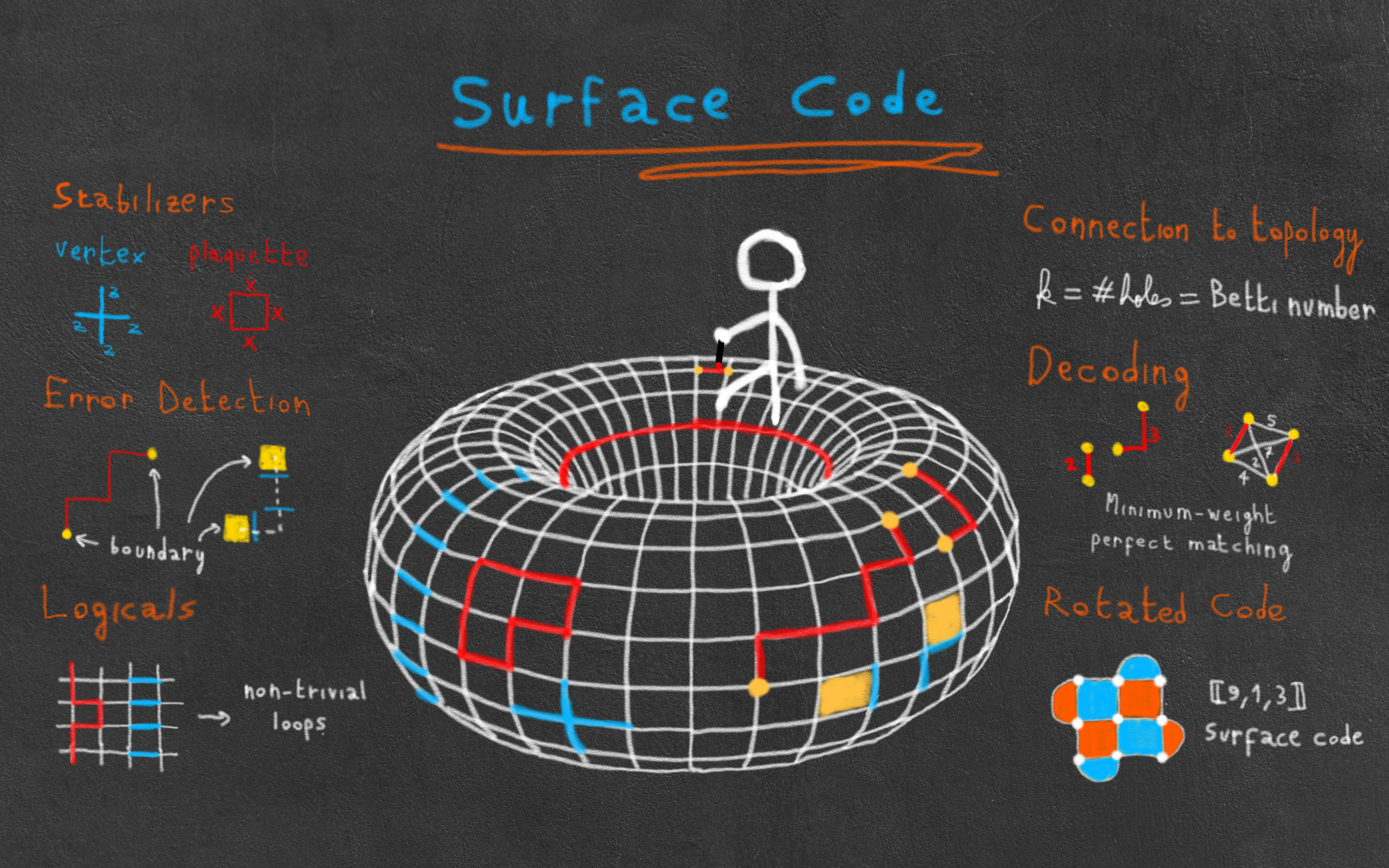
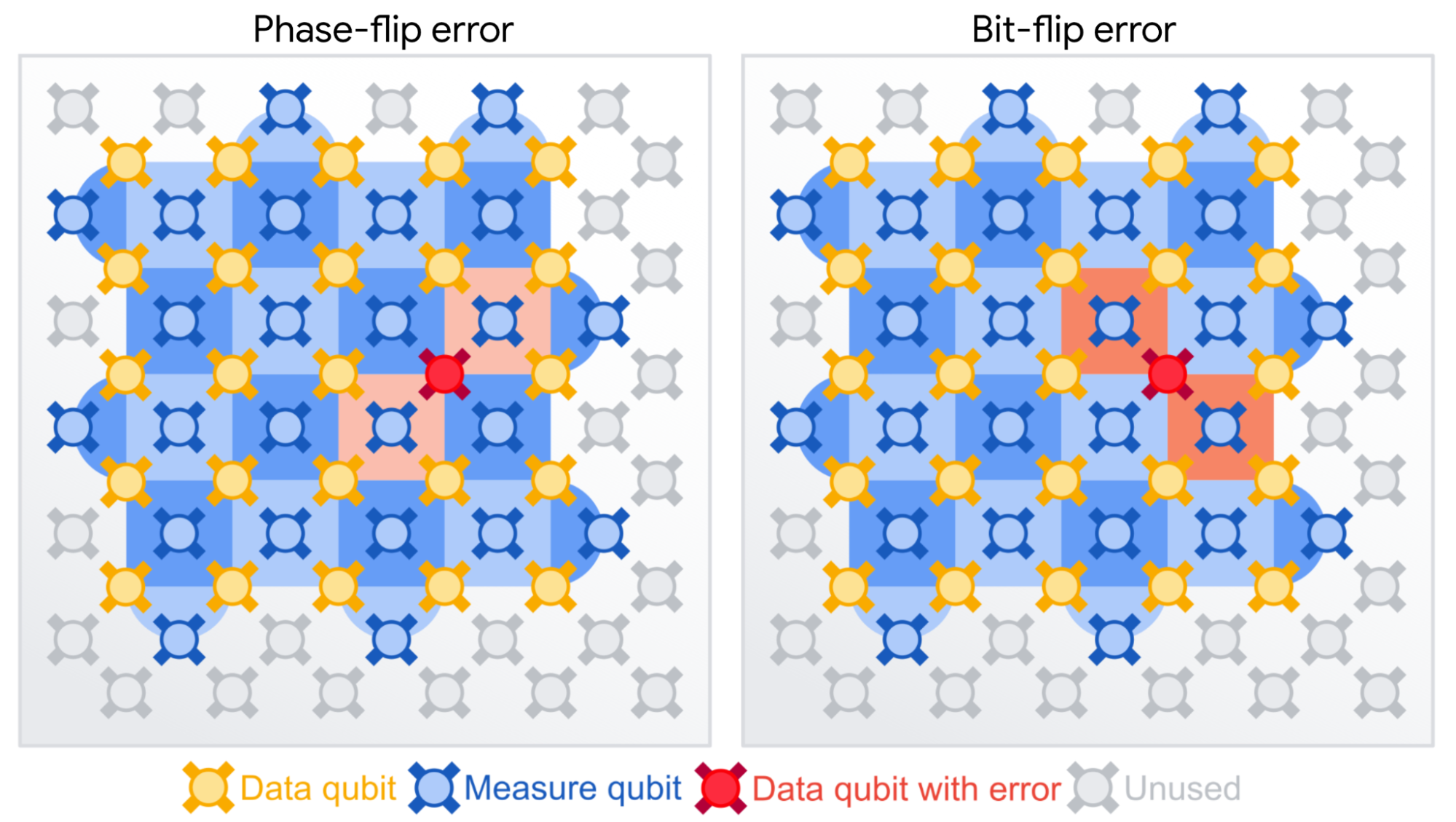
The magic happened with surface code error correction. Researchers encoded logical qubits using grids of physical qubits (think 3×3, 5×5, up to 7×7). As they increased the code distance, logical error rates dropped exponentially—halving roughly every time they scaled up. For the distance-7 code, they hit a logical error rate of about 0.143% per cycle, below the critical threshold where errors snowball.
The proof? Willow ran a random circuit sampling benchmark in under five minutes. The same task would take Frontier, one of the fastest classical supercomputers, an estimated 10^25 years. That’s not hype; that’s verifiable quantum advantage.
Here’s a diagram of the surface code in action—those colorful grids are how Google protects logical information.
Source: arthurpesah.me
And another clear view of the surface code lattice.
Source: research.google
What makes this a game-changer? It’s the first time real-time error correction on a superconducting system outperformed individual physical qubit lifetimes. Google’s Hartmut Neven called it “the most convincing prototype of a logical qubit built today.” Bold words, but the data backs them up.
Harvard, MIT, and QuEra: The Logical Qubit Leap with Neutral Atom Architectures
On the other side of the coin, the Harvard/MIT/QuEra team took a different path—and earned equal recognition. Using neutral rubidium atoms trapped in optical tweezers, they built a processor with up to 48 logical qubits from roughly 300 physical ones.
The trick? Rydberg states and reconfigurable arrays. Atoms get excited to high-energy states, interact at long range, and can be physically moved during computation to entangle different logical qubits. It’s like a living, breathing system that reshapes itself on the fly.
This allowed real-time error-corrected algorithms on multiple logical qubits simultaneously—far more than the 1–3 logical qubits seen in superconducting or trapped-ion setups at the time. The system corrected errors while running computations, a huge step toward fault-tolerant machines.
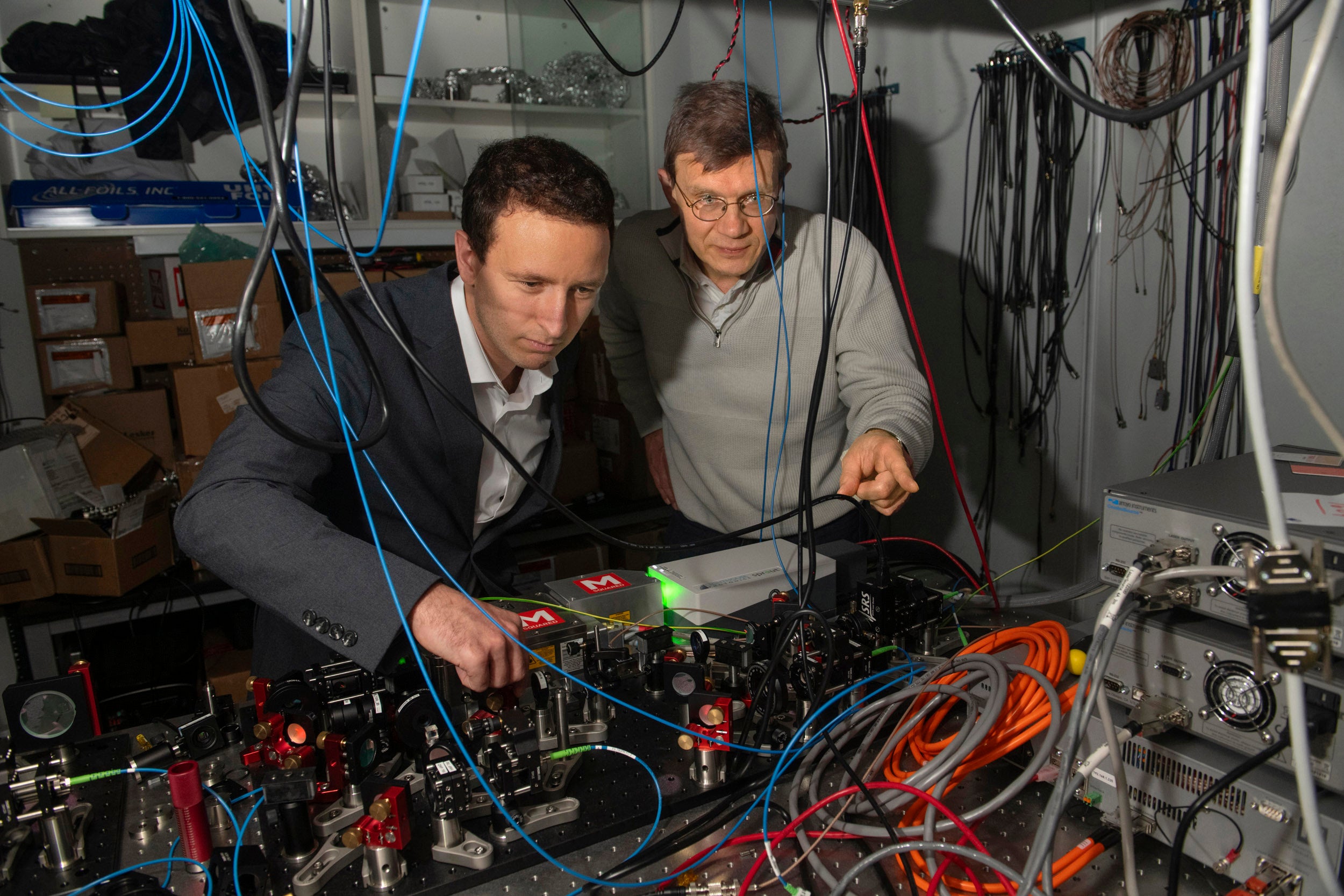
Here are some visuals of neutral atom setups—those glowing dots are individual atoms holding quantum information.
Source: news.harvard.edu
And a lab view of the QuEra/Harvard neutral atom array.
Source: hpcwire.com
HPCwire – Since 1987 – Covering the Fastest Computers in the World …
Physics World couldn’t choose between the two, so they shared the 2024 Breakthrough of the Year. That says a lot.
Comparing the Approaches: Superconducting vs. Neutral Atom Architectures
Both paths are promising, but they differ in key ways. Here’s a quick comparison table:
| Aspect | Google Willow (Superconducting) | Harvard/QuEra (Neutral Atoms) |
|---|---|---|
| Physical Qubits | 105 | ~300 |
| Logical Qubits | Demonstrated scaling (up to distance-7) | Up to 48 |
| Error Correction | Surface code, below threshold | Real-time on reconfigurable arrays |
| Key Strength | Exponential error suppression with scale | Movable qubits for flexible entanglement |
| Challenges | Cryogenic cooling, fabrication scaling | Laser control precision, atom loss |
| Timeline to Utility | Aims for 100+ logical qubits by 2030 | Roadmap to thousands of physical qubits |
| Best For | High-speed gate operations | Complex algorithm execution |
Neither is “better”—they’re complementary. Superconducting systems excel at fast gates; neutral atoms shine in connectivity and scalability.
Beyond the Headlines: Other Notable Advances
2024 wasn’t just about these two. Riverlane and others pushed quantum error correction software, IBM outlined paths to fault-tolerant memory, and advancements in photonic and topological qubits continued quietly. Global investments hit record highs, and NIST finalized post-quantum encryption standards—because when quantum breaks classical crypto, we’d better be ready.
Real-World Implications and Timelines
So, what does this mean for business? We’re still in the early days—don’t expect quantum to replace your laptop tomorrow. But 2024 laid groundwork for applications in drug discovery, materials science, optimization, and cryptography.
Experts talk about “quantum utility” in the next 5–10 years, with fault-tolerant systems possibly by the early 2030s. The transition from NISQ to logical qubits is the key unlock.
FAQs:
What is a logical qubit? A logical qubit combines many physical qubits with error correction to protect information from noise. Think of it as a reliable qubit built from unreliable parts.
How many qubits do we need for real-world use? Estimates vary, but thousands to millions of physical qubits for millions of operations. 2024 showed we can scale logically, which is the hard part.
Is quantum supremacy real in 2024? Yes—Google’s Willow demonstrated it convincingly on a benchmark no classical machine can touch in reasonable time.
When will quantum computing impact my industry? Likely 5–15 years, depending on the sector. Finance and pharma are watching closely.
Are there risks? Sure—cybersecurity threats from broken encryption, but also huge upsides in science and energy.
What’s next after 2024? More logical qubits, better software, hybrid quantum-classical systems. The race is on.
Looking Ahead: My Take on the Road Forward
Honestly, 2024 felt like the moment quantum computing grew up. We’ve spent decades on theory; now we’re building machines that correct their own mistakes. Some experts still caution about timelines, and they’re not wrong—scaling to thousands of logical qubits won’t be easy. But the progress is undeniable.
If you’re a tech leader or researcher, pay attention. The inflection point is here. The question isn’t if quantum will change things—it’s how fast you can prepare.
What do you think—will we see practical quantum advantage by 2030, or is it still farther out? Drop your thoughts; I’d love to hear.
 Issam
Issam