

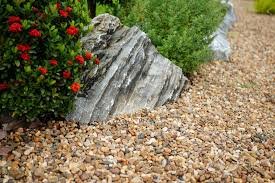
Walk into almost any garden center and the staff will steer you toward color first. Black for drama. White for contrast. Beige if you want something warm and forgiving. It feels like the big decision, so people agonize over it. They shouldn’t. After enough seasons installing stone in residential yards, I can tell you the color of the rock is the single least likely thing to wreck a project.
What actually decides whether a bed still looks sharp three years later, or sinks into a weedy mess, is far more boring: the size of the stone, how deep you lay it, and what you do at the edges. Nobody photographs those choices for Pinterest. They are the ones that matter.
Why size beats shade every time
The most common mistake I see is stone that is simply too small for the job it was given. Fine pea gravel, the 3/8-inch material, looks lovely in the bag. Spread it two inches deep across a wide bed that people walk past, and it migrates. It gets tracked onto the lawn, raked into the grass by mistake, kicked onto the patio. By midsummer the coverage is patchy and the bed looks tired.
For anything that sees foot traffic, a 1- to 2-inch stone holds its ground far better. It locks together slightly, resists scattering, and still reads as a refined surface rather than a driveway. Suppliers that sort their catalog by size make this easy to get right. A well-organized range of decorative landscaping stones, running from half-inch gravel up to four- and six-inch cobble, lets you match the material to the function instead of guessing in a parking lot.
Keep the larger stones, the 3- to 6-inch pieces, for accents. A cluster around a downspout. A dry creek bed. A border against a fence. Used across a whole bed they feel heavy and awkward to walk on. Used sparingly, they give the eye somewhere to land and break up an expanse of finer material.
Shape deserves a quick mention too, because it changes how a stone behaves underfoot. Rounded, tumbled pebbles roll and shift, which is pleasant in a display bed but unstable on a path. Angular crushed stone and slate chippings knit together and stay put, which is why they make better walking surfaces and better drainage fill. A practitioner picks shape for the job first, then sorts through the colors available in that shape, not the other way around.
Does color really not matter?
It matters. It just matters later. Once size and depth are settled, color and finish become the genuinely enjoyable part of the decision, and there is room to play. Polished black pebbles look striking next to water features and modern hardscaping. Off-white and light gray stones bounce daylight into shaded corners that always feel a little gloomy. Semi-polished finishes sit between the two, catching light without the mirror glare of a high-gloss stone.
One caution worth repeating. The styled photos on Houzz and Pinterest are shot in perfect light with freshly rinsed stone. Your bed will see mud, pollen, fallen leaves, and the flat gray light of an overcast afternoon. Pick a color you still like in those conditions, not just the one that pops in a catalog.
The depth nobody talks about
Two inches is the working minimum. Below that, soil or landscape fabric peeks through, weeds find daylight, and the whole bed reads as thin and unfinished. At two inches and up, the stone suppresses most weed growth, holds a clean line, and actually looks intentional.
This is where the math catches people out. A standard 22 lb bag covers roughly 1 to 1.5 square feet at a 2-inch depth. A bed that looks small from the back door can swallow far more stone than expected. Measure the area, decide your depth, and calculate before you order. For anything larger than a couple of beds, bulk or pallet pricing usually beats buying bags one at a time, and you avoid the frustrating midproject run back to the store.
One more thing on depth. Stone settles. Over a few seasons, foot traffic and freeze-thaw cycles press the bottom layer into the soil below, and a surface that started at a clean two inches can thin out to something closer to one. A light top-up every few years restores it, which is still a fraction of the work an annual mulch replacement demands. Planning for that small future addition, rather than being surprised by it, is part of doing the job properly.
Edges, fabric, and the unglamorous parts that last
Stone moves. Water, gravity, and foot traffic all push it outward, and without a hard edge it slowly bleeds into the lawn. Steel or aluminum edging, a paver border, or even a clean spade-cut trench will hold the line. Skip this step and you will be raking stone back into place every spring, wondering why the bed never looks as crisp as it did on day one.
Landscape fabric is more nuanced than the internet suggests. Under a purely decorative stone bed with no plants, fabric is fine and slows weeds considerably. Under a planted bed it tends to cause trouble, choking roots and eventually clogging with silt so weeds simply root on top of it anyway. And if you are building a path meant to carry weight, the real work happens below the decorative layer: a compacted base of crushed stone, not pretty pebbles poured straight onto dirt.
A quick reality check before you buy
Order a sample first. Most serious stone suppliers sell small 2- or 3-pound sample bags for the price of a coffee, and seeing the material in your own yard, wet and dry, tells you more than any screen ever will. Big-box retailers like Home Depot, Lowe’s, and RONA stock bagged stone, and that is convenient, but the selection of polished and signature finishes tends to be thin, so comparing against a specialist before you commit usually pays off.
Buy about ten percent more than your calculation suggests. Settling, the odd low spot, and a future repair all draw from that margin, and matching stone from a later batch is never quite perfect.
Look at the stone wet, not just dry. Rain and morning dew darken most stone considerably, and a pale gray that looks crisp in the bag can read almost charcoal after a storm. If your region sees a lot of wet weather, the wet color is the one you will actually live with for much of the year.
So here is the honest summary. Color is the decision people lose sleep over and the one that forgives them most. Size the stone to its job. Lay it deep enough to do that job. Contain the edges, and handle the dull groundwork underneath. Get those four things right, and a stone bed will quietly outlast three rounds of mulch while you take all the credit for the color.